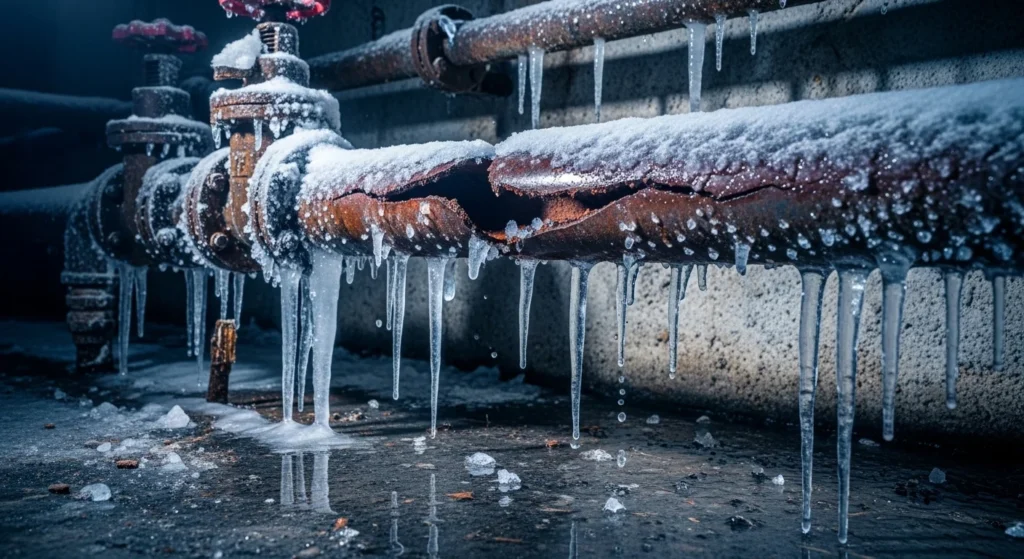
When the temperature plummets across Steinbach and Winnipeg, your home’s plumbing system goes onto the front lines. A frozen pipe isn’t just an inconvenience; it’s a ticking time bomb. When water freezes, it expands with immense force, easily cracking copper, PVC, and PEX piping. Once that ice thaws, a single burst pipe can release hundreds of gallons of water into your home in a matter of hours.
The Early Warning Signs of Freezing Pipes
Catching a frozen pipe before it bursts can save you thousands of dollars in water damage. Pay attention to these three critical warning signs when the deep freeze sets in:
- A drop in water pressure: If you turn on your kitchen or bathroom faucet and only a trickle or a few drops come out, ice has likely formed inside the line.
- Visible frost: For exposed pipes in your basement, crawlspace, or beneath sinks against exterior walls, physically look for a layer of white frost or condensation on the outside of the pipe.
- Strange odors: If a pipe is blocked by ice, the normal venting process of your plumbing can be obstructed, occasionally pushing strange smells back up through your drains.
4 Steps to Protect Your Plumbing
Prevention is significantly cheaper than a middle-of-the-night emergency plumbing call. Here is how you can winterize your home right now:
1. Insulate Vulnerable Pipes
Pipes located in unheated areas—such as garages, attics, crawlspaces, and exterior walls—are highly susceptible to freezing. Wrap these lines in foam pipe insulation or fiberglass sleeves.
2. Let the Faucet Drip
If the forecast predicts extreme negative temperatures, turn on your faucets just enough to allow a slow, steady drip. Moving water is much harder to freeze, and leaving the tap open slightly relieves the pressure inside the system if ice does begin to form.
3. Open Cabinet Doors
Plumbing housed under kitchen and bathroom sinks is often completely cut off from your home’s heating system. Open those cabinet doors to let the warm air from your house circulate around the pipes.
4. Seal Drafts and Cracks
Take a walk around your home’s exterior and basement. Look for any cracks or gaps near where pipes run and seal them with caulk or expanding foam. Even a tiny draft of -30°C air hitting a pipe directly can freeze it in hours.
⚠️ Never Do This to a Frozen Pipe
If you discover a frozen pipe, never use an open flame, blowtorch, or propane heater to thaw it. Not only is this a massive fire hazard, but boiling the water inside the pipe too quickly can cause the pipe to explode from steam pressure. Instead, use a hair dryer on a low setting, a space heater kept safely away from flammable materials, or wrap the pipe in towels soaked in warm water.
What to Do When a Pipe Freezes (Or Bursts)
If you turn on your faucet and nothing comes out, do not wait for the situation to resolve itself. Leave the faucet turned on so that as the ice melts, the water has somewhere to flow.
Need Emergency Help Now?
If you have a frozen or burst pipe in Steinbach or Winnipeg, our Red Seal Certified plumbers are on call. We respond rapidly to minimize damage to your property with honest, upfront pricing.
Call Drain Medic Plumbing