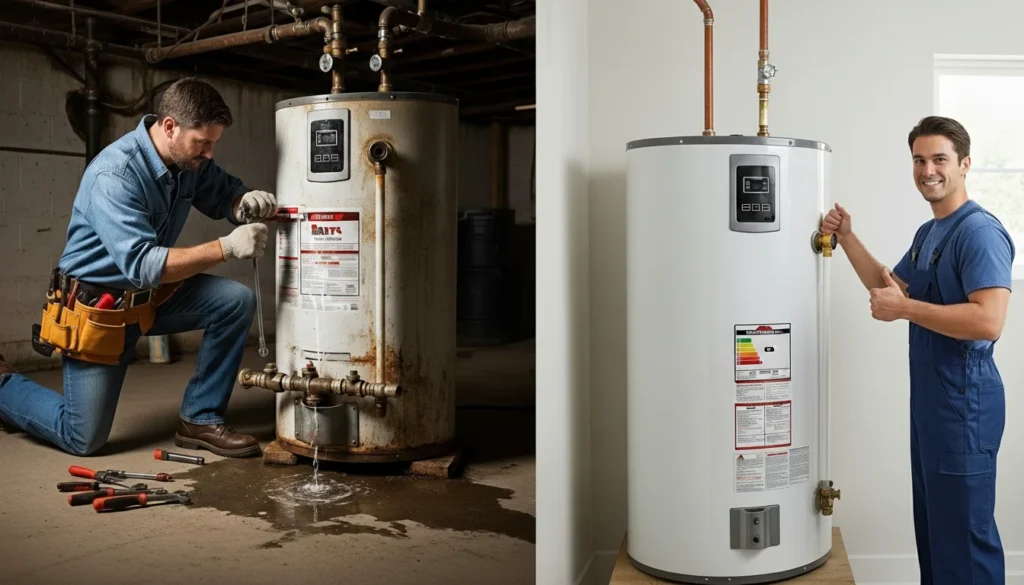
Nobody thinks about their water heater until they step into a freezing cold shower on a Tuesday morning. When your hot water stops flowing, the immediate panic sets in: Can this be fixed, or am I going to have to buy a whole new unit?
A water heater is one of the most heavily used appliances in your home. Deciding whether to repair or replace it comes down to a mix of age, repair costs, and the specific symptoms your tank is showing. Here is how the experts at Drain Medic Plumbing help homeowners in Steinbach and Winnipeg make the right call.
The “Age Rule” for Water Heaters
The lifespan of a traditional tank-style water heater is highly predictable. On average, a standard tank will last between 8 to 12 years. If your tank is under 8 years old and stops producing hot water, a repair (like replacing a faulty thermostat or heating element) is almost always the smartest, most cost-effective choice.
The 50% Cost Rule
If your water heater is nearing the end of its expected lifespan (10+ years old), you need to weigh the cost of the repair against the cost of a brand new unit. As a general rule of thumb in the plumbing industry, if the cost of repairing the unit is more than 50% of the cost of replacing it, you should replace it.
Pouring money into a decade-old tank is often a losing battle. A new unit will not only give you peace of mind with a fresh warranty, but modern water heaters are also significantly more energy-efficient, which will lower your monthly utility bills.
3 Key Symptoms That It’s Time to Replace
Sometimes, your water heater makes the decision for you. If you notice any of these three severe symptoms, a replacement is usually inevitable.
1. Rusty or Discolored Water
If the hot water coming out of your faucets looks brown, yellow, or rusty, but your cold water runs clear, your water heater is rusting from the inside out. Once a steel tank begins to rust internally, there is no way to repair it. It is only a matter of time before the rust eats completely through the metal and causes a leak.
2. Rumbling, Popping, or Banging Noises
As water heaters age, minerals from hard water build up at the bottom of the tank, forming a thick layer of sediment. When the burner heats the tank, the water trapped under this hard sediment boils and pops. While a routine tank flush can sometimes clear minor buildup, severe hardened sediment will permanently ruin the tank’s efficiency and eventually crack the glass lining.
⚠️ 3. Moisture or Leaks Around the Base
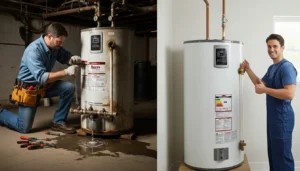
This is the ultimate red flag. If you see puddles or active dripping coming directly from the bottom of the tank (not from a loose pipe connection at the top), the structural integrity of the tank has failed. A leaking tank cannot be patched or repaired safely. You must turn off the water supply to the heater immediately to prevent a basement flood and call a professional for a replacement.
Still Unsure? Get a Professional Diagnosis
Guessing what is wrong with a high-voltage, pressurized appliance is never a good idea. Sometimes a completely dead water heater just needs a simple, inexpensive part replaced.
Book a $140 Water Heater Diagnostic
Don’t replace a unit that can be easily fixed, and don’t waste money repairing a tank that’s about to burst. Drain Medic Plumbing offers a professional, no-pressure diagnostic service to tell you exactly what is wrong and give you honest options.
Schedule Your Diagnostic Today